Identity, Access, and Becoming in the Gorkhaland Movement
Debbani Bhattacharya
PhD Scholar, Department of Humanities and Social Sciences. Indian Institute of Technology, Kanpur
Stepping into the field as a researcher in a post-pandemic world is like stepping into a story that is already in motion—disjointed, fragmented, and complex. I remember the mix of excitement and quiet anxiety that accompanied my decision to study the political processes involved in the trajectory of the Gorkhaland movement for my PhD. [i] The commencement of the fourth phase of the social movement in Darjeeling, triggered by the West Bengal government’s 2017 directive mandating Bengali as the language of communication in the region, coincided precisely with the onset of my doctoral studies. This directive proved contentious, given the historical predominance of Nepali-speaking communities in Darjeeling. It is pertinent to note that Nepali was recognized as the second official language in the state in 1961, through a state act designed to accommodate this linguistic demographic. Furthermore, its inclusion in the Eighth Schedule of the Constitution of India in 1992 underscored its constitutional recognition. The temporal alignment of these events rooted in language politics along with my academic journey rendered this particular social movement an important status and almost became serendipitous choice for my PhD thesis in 2018.
But what I didn’t account for was the weight of identity that this choice carried, and how inescapable it would be once I entered the field. Being Bengali in a region where Bengali identity is often seen as a symbol of historical domination and exclusion raised immediate, unspoken questions. Could I truly research this topic with the detachment expected of an academic? Was it ethical, even, to study a people whose anger might include someone like me—by virtue of my identity alone?
These were not hypothetical musings. As I progressed in my research, the politics of identity surfaced repeatedly—not just in conversations, but in silences, in guarded expressions, and in the emotional undercurrents that ran beneath interviews and interactions. I often asked myself: would I have chosen this topic if I weren’t Bengali? Would the field have received me differently if I belonged to the Gorkha community I was researching?
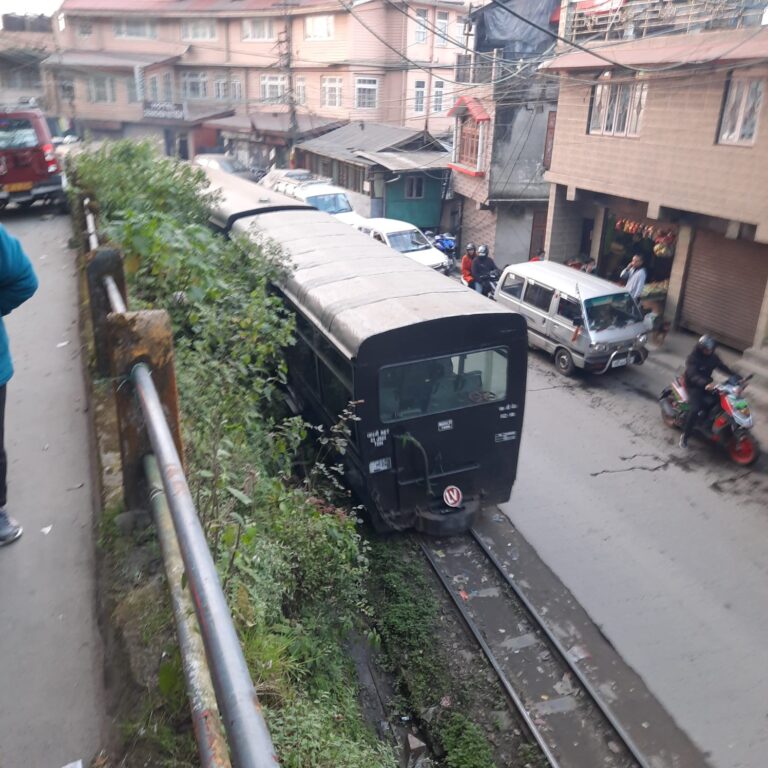
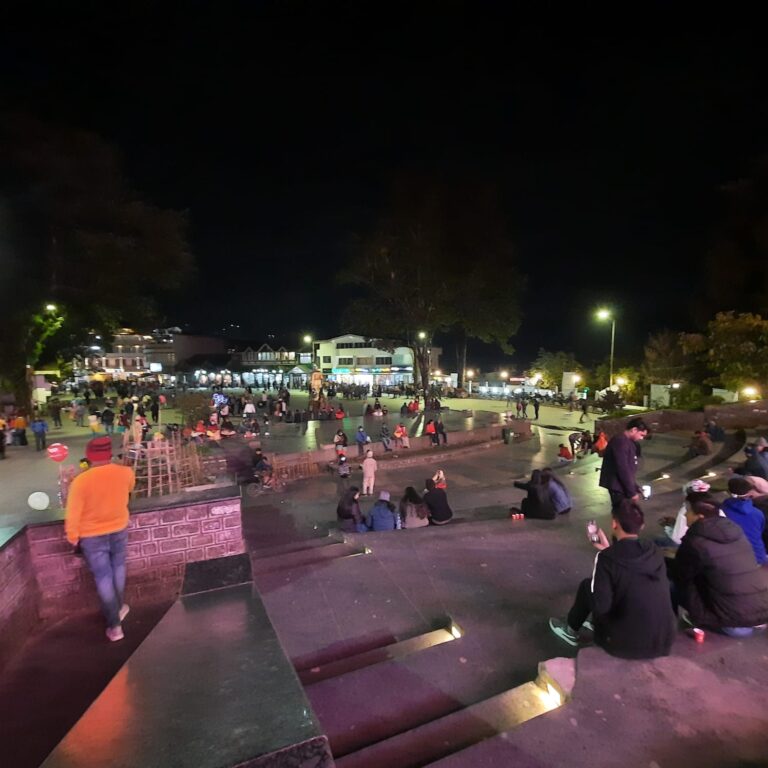
And then the pandemic arrived, pausing everything. My fieldwork, originally planned for the summer of 2021, was postponed. That delay added more than just a logistical hurdle; it added emotional distance from the topic and heightened the anxiety of returning to a world still reeling from crisis. When I finally arrived in Darjeeling that winter, the disorientation was immediate. The field was not what I had imagined—richer, more chaotic, politically entangled in ways that no journal article or media report had prepared me for.
The complexity of the region’s politics was startling. There wasn’t a singular “Gorkhaland movement” but many versions of it, represented by a mosaic of political parties, splinter groups, and local leaders with differing stakes and stories. My preconceived understanding quickly gave way to humility. I was not there to map a movement—I was there to listen to a cacophony of voices, many of which were skeptical of me from the outset.
One of my first steps was to build rapport with a local government employee who gradually helped me orient myself. Our early conversations were tentative, guarded. I knew I was the outsider here—not just geographically, but politically, culturally, emotionally. I had to earn trust, not demand it through my academic credentials. Slowly, I learned that access wasn’t about strategy; it was about presence—showing up consistently, listening deeply, and allowing time to do its work.
Through this primary local contact I was introduced to a key figure in one of the oldest political parties involved in the movement. That meeting opened the door to a network I hadn’t anticipated—local journalists. In retrospect, they became my most important collaborators in the field. Initially wary, they observed me quietly, perhaps trying to understand my intent. I had to sit through endless hours of casual conversations, local events, and informal gatherings to prove that I wasn’t there just to extract information and leave. I had to earn the right to ask questions.
Being a woman in this field added another layer of complexity—but also unexpected access. My vulnerability, rather than being a barrier, became a bridge. The local journalists—mostly men—often felt a sense of moral duty to “protect” and support me. They respected my dedication and seemed quietly impressed by my perseverance in a field that many, including some of them, considered too volatile for a woman outsider.
Their acceptance was not immediate, nor was it unconditional. It required careful self-presentation. I had to carry myself in a way that did not come across as threatening or overly confident. I had to balance strength with humility, knowledge with curiosity. And in doing so, I learned how identity works in subtle ways—not just in how others see you, but in how you present yourself to the world.
Still, my Bengali identity remained a delicate issue. There were moments during interviews when respondents would veer into stories of betrayal, marginalization, and cultural erasure at the hands of Bengalis. I had to listen without defense. I had to carry the burden of that identity while also creating enough space between myself and that collective label to allow for trust and dialogue. There were times when I wanted to explain, to push back—but I didn’t. Those moments weren’t about me. They were about creating space for voices that had long felt unheard.
The field taught me to be flexible, not just in terms of logistics but in methodology and ethics. My initial vision of conducting ethnographic, bottom-up research gradually gave way to a more strategic top-down approach. Gaining access through party leaders allowed me to meet middle and lower-level members who would otherwise have remained inaccessible. While this was not the ideal ethnographic immersion I had once imagined, it was the reality imposed by time constraints and pandemic-related limitations.
Looking back, this shift wasn’t a compromise—it was a lesson. The field doesn’t always align with your academic ideals. Sometimes it resists them. And sometimes, it reshapes your methodology in the process, pushing you toward ways of working that are more grounded in reality.
One of the most illuminating insights was understanding how access is not given—it is negotiated, over time, and with genuine effort. My relationships with journalists turned out to be the most pivotal part of my research journey. They became gatekeepers, interpreters, and sometimes even protectors in a field full of tension. Their trust was not something I could have predicted, and it became one of my most meaningful accomplishments.
By the end of my fieldwork, I realized I had undergone a personal transformation. I no longer saw myself solely as a researcher collecting data—I had become a witness to a lived reality, emotionally entangled in ways I hadn’t expected. The field blurred the lines between observer and participant, outsider and insider, self and other.
I began my journey thinking of power as something I possessed—as a researcher with institutional backing, with the privilege of recording stories and writing about them. But in the field, that power felt fragile. I was dependent on my respondents for access, context, and meaning. Our relationship was reciprocal and, at times, deeply human. Fieldwork taught me that being a researcher is not about authority—it is about empathy, negotiation, and humility. It is about showing up even when you feel uncomfortable, about listening when you feel implicated, and about letting go of the illusion of objectivity to embrace the messiness of reality. Most of all, I learned that research is not just about uncovering facts—it is about understanding people, identities, histories, and emotions that cannot be quantified. It is about giving space to voices that resist easy categorization, and about acknowledging the deep, ongoing work of becoming—not just as a scholar, but as a human being.
As I continue my academic journey, I carry with me the textures of this experience—the tensions, the learnings, the moments of silence and connection. And I hope to carry them not just into future fieldwork, but into the way I think, write, and relate to the world.
Author Bio: Debbani Bhattacharya is a Ph.D. candidate in Sociology at IIT Kanpur, specializing in Identity politics and electoral transformation in demand for statehood movements. Her research examines the Gorkhaland movement through ethnography and qualitative analysis focusing on the role of local political parties and their interaction with government through electoral coalition. She has presented at national and international conferences and has recently submitted her PhD Thesis.
Endnote
[i] “Gorkhaland Movement” is rooted in the century long demand existing in northern parts of West Bengal (specifically Darjeeling hills region consisting of Darjeeling, Kurseong and Kalimpong) for separation of the region from the administrative set-up of the Bengal province (in colonial times). The movement reiterates the importance for a separate state for the Nepali speaking Indian citizens (Gorkhas) in India within its federal structure. The first recorded demand is traced back historically to 1907 followed by four phases of mobilization activities between 1986 and 2017 when the demand took the shape of a social movement demanding separate statehood in academic sense of the term.