
Learning Through Interruption: Fieldwork Reflections from Urban Borderlands in Northeast India
Sanskriti
PhD Research Scholar, School of Liberal Arts, IIT Jodhpur
This fieldwork reflection draws on my doctoral dissertation, which focuses on the media historiographies of urban borderlands in Northeast India, particularly Shillong (Meghalaya), Kohima and Dimapur (Nagaland), Imphal (Manipur), and Aizawl and Lunglei (Mizoram). It explores how Indigenous publics mobilise belonging, sovereignty, and cultural memory through media practices forged amid histories of insurgency, leaky infrastructures, militarisation, and precarity. In this dissertation, I define urban borderlands as the tribal-majority cities of Northeast India, specifically Shillong, Kohima, Dimapur, Imphal, and Aizawl. These are towns not necessarily positioned against a visible international boundary, yet they operate as borderlands through everyday negotiations of belonging, mobility, and recognition. These cities exist in the interstices of state presence and state absence, where aspirations of national modernity unfold alongside infrastructural neglect, unstable governance, and historically sedimented anxieties of sovereignty.
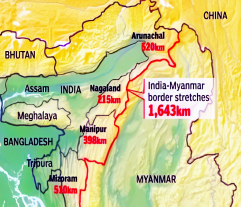
When I began my ethnographic fieldwork in Shillong, Meghalaya, in January 2024, I quickly realised that many of the methodological tools I had acquired through disciplinary training many of the methodological tools I had acquired through disciplinary training proved inadequate for the precarious realities of the borderlands of Northeast India, long shaped by histories of violence. Conducting ethnography in urban borderlands shaped by histories of violence, militarisation, and infrastructural neglect demanded a different kind of attentiveness—one that foregrounded waiting, listening, and ethical restraint as modes of learning. Fieldwork here did not proceed through predictable interviews or linear schedules; instead, it unfolded through interruptions that continually reshaped what could be asked, recorded, or even witnessed.
On a particularly treacherous cold January morning, I planned to visit the Northeast India Audio-visual Archive[1] at Anthony’s College, Shillong. The city was struggling with the slumber that had set in in the days following Christmas. All academic institutions and schools remained shut, and people, including locals, intra-state and inter-state educational migrants from Northeast India, and work migrants from the hills of Northeast India, flocked to their homes and villages to participate in a month-long Christmas celebration.
Later, I dropped by at a café situated between the bustling area of Don-Square and Laitumkhrah, the heart of Shillong’s academic heartland, and an area where students from nearby colleges congregate. While I was waiting for my bowl of Manchow soup, I overheard a group of university students catching up after the Christmas break before returning to their respective territorial affiliations. The group consisted of two boys and one girl, who recounted how her vacation days were mostly spent attending a funeral of a friend, who they lost tragically in a road accident. She went on to address the civic troubles and internal displacement that many of her family members had to face in Lamka, Manipur, caused in the wake of the 2023 inter-ethnic clashes in Manipur. The account included how one of her friends had to lose her house and witness the destruction of personal property and assets, including the burning of the family car. These friends, family members, and acquaintances had to secure refuge in Shillong and Guwahati. She eventually exclaimed that her mainland Indian friends reached out to her during testing times and proclaimed their solidarity with reassuring words, “We are keeping you and others like you in prayers.”
Months later, I revisited this moment, and the conversation crystallized the eerie atmosphere of my field sites. Conducting ethnography in the borderlands of Northeast India between 2023 and 2025 meant navigating shifting terrains of violence, infrastructural precarity, and political contestation. Mobility, circulation, and temporal rhythms were continuously reconfigured by overlapping crises. The May 3, 2023, Meitei–Kuki–Zo ethnic conflict displaced nearly 60,000 people across Imphal and the surrounding valley-hill interfaces (Internal Displacement Monitoring Centre Report, 2024; The Economic Times, 2024), fracturing inter-village movement and making ethnography inseparable from grief.
Between January and April 2024, recurring internet shutdowns in Manipur (e.g., February 8–12, June 2024) stalled ethnographic research, demanding patience and respect for the local field guides, interlocutors, and friends (Internet Shutdowns, 2023). Floods in June 2024 transformed urban circulation in Imphal into zones of waterlogging and emergency relief, while landslides in Mizoram and border tensions with Bangladesh slowed both market flows and informal media circuits. The withdrawal of the Free Movement Regime[2] (February 2025) and the extension of the Armed Forces (Special Powers) Act (AFSPA)[3] across most of Manipur by October 2025 (The Times of India, 2025) formalized an uneven state presence, characterized by hyper-visible militarization alongside infrastructural neglect.
These conditions taught me that mobility in the field is not merely logistical but deeply ethical. Each postponed visit, unanswered message, or cancelled interview carried its own lesson about when not to ask questions and when presence itself could become intrusive. In many moments, learning took the form of restraint—recognising that interlocutors were navigating grief, uncertainty, or surveillance, and that research agendas had to yield to these realities.
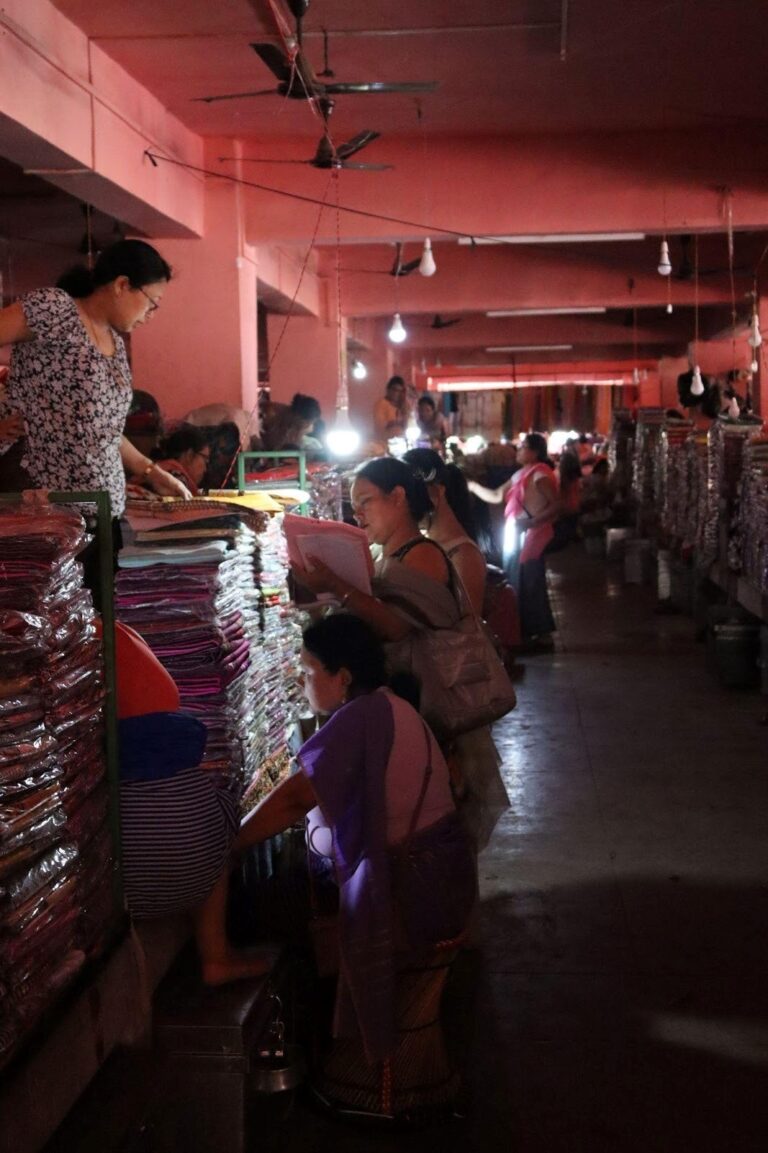
Roads and highways emerged as particularly instructive sites of learning. As existing scholarship on Manipur has demonstrated, roads serve as both symbols of development and instruments of governance, frequently becoming sites of protest, blockade, and negotiation (Ziipao, 2020). During my fieldwork, everyday activities were contingent on curfews, checkpoints, and the fluctuating status of national highways. Markets reorganised around security rhythms; students planned travel according to news of impending blockades. Observing these patterns taught me to read infrastructure not as background but as an active pedagogue shaping temporal rhythms, social relations, and affective states.
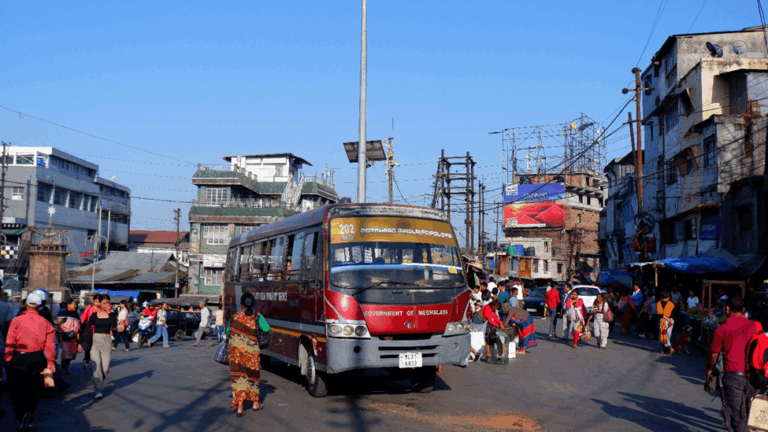
My encounters with these rhythms emerged not as abstract theoretical insights, but as lived reality. Travel schedules were continually rearranged, sometimes due to landslides, sometimes owing to sudden protests and blockades, and sometimes simply because the modes of transportation were uncertain. Days unfolded according to the availability of power and signal rather than a neatly planned research itinerary. Interviews were often rearranged to accommodate the availability of electricity, when phones could be charged, and videos could be streamed. What I first experienced as disruption slowly revealed itself as a pattern: a rhythm of waiting, moving, pausing, and resuming. The valley—Imphal and Dimapur—moved at a faster tempo than the hills. Urban lowlands had more predictable electric grids, denser telecom towers, and greater infrastructural redundancy. Rhythmanalysis[4] allowed me to interpret these not as interruptions but as patterned forms of living. What looked like a delay was a method of endurance, and what felt like silence was an infrastructurally taught pause. Viewers tended to gather communally when the network returned, turning viewing into a rhythmic social event rather than a solitary, private one.
As a researcher trained to value documentation and recording, I also learned that not everything could or should be captured. There were moments when photographs felt inappropriate, when audio recorders stayed switched off, and when silence itself became instructive. These decisions were not methodological failures but forms of ethical learning shaped by local cues and relational accountability. The field taught me to recognise refusal, hesitation, and delay as meaningful forms of communication rather than obstacles to data collection.
Reflecting on these experiences, I came to understand ethnography in the borderlands as an ongoing process of unlearning. The field did not offer stable ground from which to observe; instead, it demanded attunement to fragility, improvisation, and care. Learning occurred through moments of failure, rupture, and interruptions that reorganised both everyday life and research practice. Education, in this context, was not confined to classrooms or curricula but emerged through shared stories, infrastructural negotiations, and the labour of endurance.
For scholars interested in education and fieldwork in South Asia, these experiences highlight the importance of broadening our understanding of learning environments. Urban borderlands, such as those in Northeast India, serve as informal classrooms where political histories, infrastructural conditions, and ethical relations continually shape the production and sharing of knowledge. Attending to these spaces requires methodologies that are sensitive to precarity and responsive to the lessons embedded in disruption itself. What the field ultimately taught me was that learning, like ethnography, often unfolds most profoundly in moments of pause, when research plans falter, and listening becomes the primary mode of inquiry.
Bio: Sanskriti is a Doctoral Scholar at the School of Liberal Arts, IIT Jodhpur. Her research lies at the intersection of media anthropology and borderland studies, focusing on how cultural practices and media infrastructures shape everyday life, citizenship, and sovereignty in the borderlands of Northeast India. She also serves as a Junior Editor for the International Journal of Disney Studies.
References
Lefebvre, H. (2004). Rhythmanalysis: Space, time and everyday life (S. Elden & G. Moore, Trans.). Continuum.
Sanskriti. (2025). “Accounts of the Borders: Flow and Interruptions in India’s Borderlands.” Hakara (Edition 24). https://hakara.in/sanskriti/
Ziipao, R. R. (2020). Infrastructure of injustice: State and politics in Manipur and Northeast India. Routledge.
Internal Displacement Monitoring Centre. (2024). India: Displacement associated with conflict and violence.
https://www.internal-displacement.org
Software Freedom Law Center India. (2023). Internet shutdowns tracker.
https://internetshutdowns.in
Telecom Regulatory Authority of India. (2023). Annual report 2022–23.
https://www.trai.gov.in
The Economic Times. (2024, May 15). Manipur violence accounted for 97% of displacements in South Asia in 2023: Report.
https://economictimes.indiatimes.com/news/india/manipur-violence-accounted-for-97-of-displacements-in-south-asia-in-2023-report/articleshow/110143790.cms
Endnotes
[1] The centre is an audiovisual archive that collects and digitizes artefacts documenting the history, heritage, and culture of Northeast India. This public archive is maintained, administered, and curated by the Department of Mass Media at St. Anthony’s College, with support from the Sasakawa Peace Foundation (Japan).
[2] Free Movement Regime (FMR), instituted in 2018 under India’s Act East Policy, permitted borderland communities along the India-Myanmar frontier to cross up to 16 kilometers without visas. The FMR emerged as a para-legal space of governance that followed a distinct political grammar rooted in tribal epistemologies that perceive borders as fluid, relational, and embodied, thus challenging the modern state’s territorial sovereignty. Its importance lies in legitimising borderland Indigenous governance within a space for non-state actors to enact a claim to sovereignty outside of the state (Hakara, 2025).
[3] Armed Forces Special Powers Act (AFSPA), 1958 is an act of the Parliament of India that grants special powers to the Indian Armed Forces to maintain public order in the disturbed areas. The AFSPA was first enforced in the Northeast India in 1958, when the central government classified the North East as a “disturbed area.” After 1958, the AFSPA has been incrementally applied to cover the seven states in the North East. The AFSPA grants the army the right to shoot to kill, destroy property, and temporarily detain suspects.
[4] Rhythmanalysis offers a conceptual and methodological grounding for attending to the temporalities that shape everyday life—repetitions, interruptions, accelerations, and delays that organise social worlds (Lefebvre, 2004).