
When the Field Looks Back: Police, Weed, and the Researcher
Mamoon Bhuyan
Doctoral Researcher, Brunel, University of London
“One can be lost in the field, fall in love, get frustrated, or go native” (Kikon, 2020, p. 39).
This piece critically reflects on two fieldwork instances based on my doctoral research in the chars (river islands) of the lower Assam region in the northeastern part of India in 2024. Chars are unstable river islands that disappear with the flooding of the river and appear when the river recedes, depositing sediments in its course. The chars in this study are situated in lower Assam, both in the Brahmaputra River as well as in the Sankosh River, situated along the trijunction of Indo-Bangladesh-Bhutan border. This makes the chars highly politicised and securitised geographies as these spaces are also driven by alleged concerns about illegal border crossings from neighbouring countries. This has led to suspicions and anxieties toward char dwellers, who are predominantly Bengali-speaking Muslims, popularly imagined as ‘uncivilised,’ ‘dangerous,’ ‘fanatical,’: all leading towards racialisation of the char community as ‘choiras’ or ‘Miya.’ These perceptions are also a result of ethno-nationalist ideas of belongingness which are marked by language, ethnicity, and religion in Assam, of which the Bengali Muslims have always been marginalised.
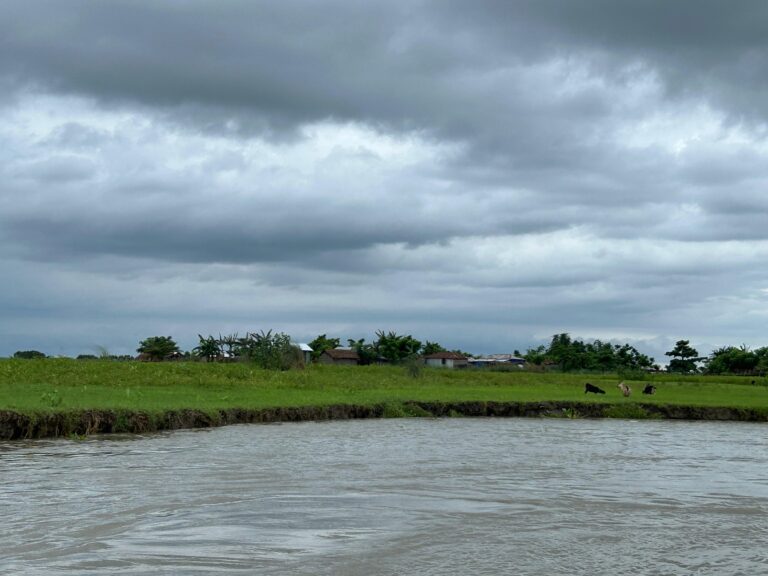
Situating my positionality as a non–‘Miya,’ ‘native,’ or an ‘insider’ in the region, my fieldwork reveals the ethical complexities in an already ‘known’ field: my ‘native’ place where I was born and have been residing until today. The ‘known’ field met me with suspicion, surveillance, and hostility. My presence as a Muslim, fluent in both Assamese as well as the ‘Miya’ dialect of the Bengali language, was frequently met with mistrust. While I do not belong to the ‘Miya’ community, my fluency in the dialect comes from being raised in a neighbourhood where the dialect is being widely spoken. However, I was perceived as an ‘outsider’ due to my identity as a non-‘Miya’ as well as due to my institutional affiliation at a university based in the United Kingdom. The two instances that follow in this piece are not mere fieldnotes, but critical moments that reflect the relational, contested, and dangerous aspects of fieldwork.
Researcher, locale, and the police
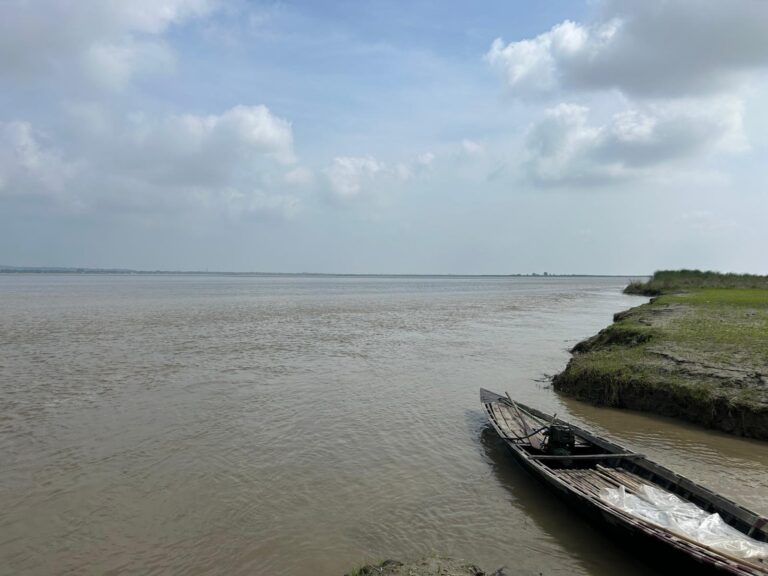
It was early May 2024; the pre-onset of monsoon and the water level of the Brahmaputra was all set to rise. One noon, I headed towards Puthimari char to meet Morzina. Morzina was suspected to be an ‘illegal immigrant’ and was declared as a bideshi (foreigner) by a Foreigners’ Tribunal [1] (Yesmin, 2024). She was arrested and taken to the Kokrajhar detention camp, the only all-women and children detention camp in Assam. After thirty-five months, she was found to be an Indian citizen and was eventually released from the detention camp. Morzina lives with her husband and two sons, one of whom is married. A female friend, Ruksaar, accompanied me to Puthimari. We had to park the car near a tea stall by the river and take a small boat to Puthimari. When we reached Morzina’s home, it was half past two in the afternoon.
Ruksaar knew Morzina in a personal capacity and she introduced me and the purpose of my visit. Hours passed by and by the time we were about to leave, it was dark. We took the same boat back to the place where the car was parked. The car, white in colour, looked like a foreign object in the river bank, and the tea stall was closed by then. Suddenly, I felt nervous at the thought that it might have drawn unwanted attention. On our way back, my nervousness turned into reality. A crowd of young Muslim men visibly intoxicated surrounded us. “Who are you? Why did you come here?” they sternly asked. They stared at me and Ruksaar. They assumed we were either journalists or local political party members. We tried to explain to them that we had come to meet Morzina. Even the boatman vouched for us, but little did they listen to us. Within a few seconds, they grew louder and warned us not to visit the place again. Some climbed up the bonnet of the car and started smoking cigarettes. One of them told us that he would hand us over to the police. This sounded like a relief to me, and I happily agreed to be dragged to the police station.
Soon, two policemen arrived on a bike. One of them was the officer-in-charge of that area. He listened to both the sides and whispered to us that these men were trying to use the opportunity to extract money from us for an upcoming local festival. These men were locals of the area and resided along with their families near the river bank. He chased them away and we were escorted out of the locality to the nearest highway. One way to look at this instance is that we might be genuinely mistaken as intruders, and the other is that the drunk men were only trying to extort money from us. The answer to this remains unknown. However, such instances speak of how easily research can be mistaken for intrusion or a malpractice, even when one shares many characteristics of an ‘insider.’
Taking note of both the possibilities, what remained constant was that my identity as a researcher was not accepted at face value, rather, it was filtered through local anxieties and local inhabitants. Fieldwork then becomes inseparable from the political climate of the field. My “exit” from the field that day was dependent on the state machinery, the police even though such dependency on the state risks reproducing hierarchies of power which at times, the locals themselves fear.
Weed, dendrite, and hammer
The Bashbari char has a reputation: teenagers to adults are addicted to Dendrite, an industrial glue that is used as a cheap drug. As I was walking towards Mazid’s (participant) house, two young boys approached me with smiling faces. One of them asked, ‘Brother, do you need some patta (leaves/weed)?’ Out of curiosity, I nodded in ‘yes,’ so as to learn the price of weed in char. Upon learning its price, I told them that I did not have enough money to pay for it and if they could give it to me at a price which was almost half of what they had asked for. One of them immediately became angry and realised that I had no intent of buying the weed. He immediately told me, ‘I will break your head with a hammer, you poor dog.’ Immediately, the other boy pulled him back and both left the place. I reached Mazid’s house, and I narrated the entire incident. He said that the char had become a ‘bhang er adda’ (hub of weed smokers), and that he felt both pity and anger towards them. However, in such places where drug economies dominate, every step can be violent and can have a severe impact on the researcher’s life. There was no trouble while heading back from Mazid’s house. My own curiosity to learn the price of the weed backfired, as it was read as deception by the two boys. Even a seemingly benign question can trigger hostility in a field when the local drug economy dominates the environment.
The two instances not only demanded critical reflexivity to introspect my own actions in the field, but also an ethical responsibility on the part of the researcher. Here, reflexivity becomes crucial not only as an ethical practice, but as a survival strategy for the researcher. Conventionally, fieldwork in the social sciences provides researchers with an opportunity for deep engagement with communities who are being studied. Even though much deep engagement was not possible due to the nature of the research, it was my positionality and shared characteristics of an ‘insider’ that allowed me to build trust with the community and facilitated access into the ‘field.’ However, my ‘familiarity’ with the ‘field’ came with its own challenges in unexpected ways.
In the above cases, trust could not be established with the local inhabitants or the community during the fieldwork: first because in one instance the field demanded intervention of the police, a state machinery and second, due to my curiousness towards learning about the local drug economy from the drug dealers. The “field” then, besides being a site of knowledge creation and knowledge production, also becomes a site where the researcher is often confronted with vulnerabilities, risks, and suspicion, especially when it comes to politically and socially sensitive settings such as the chars in lower Assam.
Note: All the names of people and chars are pseudonyms.
Bio: Mamoon Bhuyan is a doctoral researcher in Sociology, at Brunel, University of London. He is also a researcher at the Brent Arts Therapy, National Health Services, England.
References
Kikon, D. (2020). On methodology: research and fieldwork in Northeast India. The Highlander, 1(1), 37–40.
Yesmin, F. (2024). Beyond papers: understanding the making of citizenship in the Foreigners’ Tribunals of Assam. Contemporary South Asia, 1–14. https://doi.org/10.1080/09584935.2024.2413957
Endnotes
[1] Foreigners Tribunals (FT) are quasi-judicial bodies set up by the Government of Assam to ‘identify illegal immigrants’ in Assam. There are about 100 FTs in the state, each headed by a representative of the state.