
Working with the Margins: Reflections from an Urban Periphery of Kerala
Krishna Prabha V
PTS-III (Social Worker), Indian Council of Medical Research, Vector Control Research Centre, Puducherry, India
I entered the Thoppu Line in 2024, during my Master of Social Work field practicum, with a neat, textbook intention to practise community organisation. Yet, the moment I slipped through the narrow opening beside the canal, that tidy intention collided sharply with reality. The smell from the Amayizhanchan canal did not simply ‘exist’ in the background; it rose like a physical wall, a dense mix of stagnation, rotting waste, and residue that clung to skin and breath. It felt like an unspoken threshold; once you crossed it, you were no longer in the capital city of Kerala, i.e Thiruvananthapuram, as it appears on brochures, government reports, or tourist maps.
Despite being geographically central, the Thoppu Line lives on a social edge. Once you crossed it, you entered a different Thiruvananthapuram, a version that does not appear in development reports or glossy urban imaginations. It exists in the shadows of apartment complexes, offices, and main roads, yet remains structurally sidelined. This is what scholars describe as urban marginality: not produced by physical distance from the city’s core, but by social, political, and institutional distance from attention, resources, and recognition. The settlement is there in plain sight, but not quite ‘seen.’ It is physically present in the urban landscape, yet politically, bureaucratically, and morally invisible.
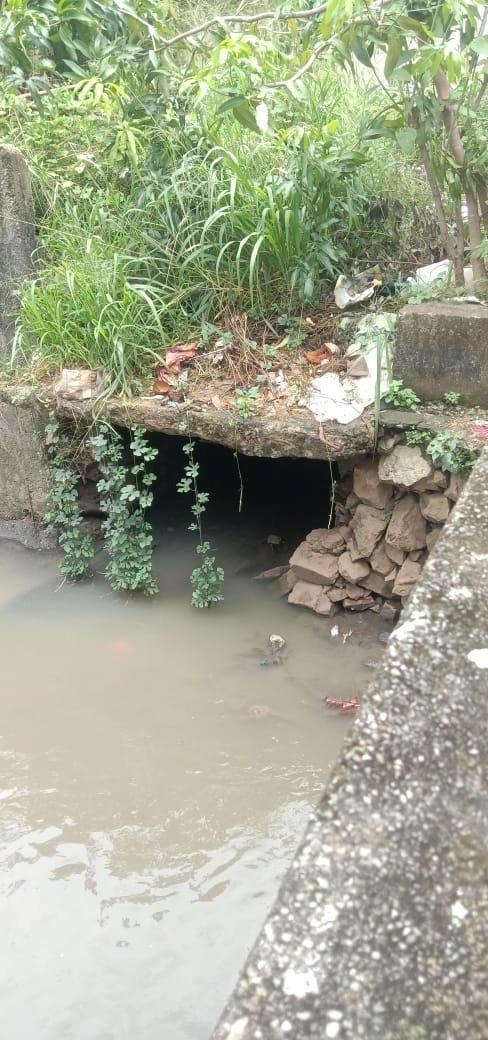
Entering a distrustful field: When positionality is assigned to you
My first interaction with the residents revealed how deeply this marginality had become ingrained in everyday bureaucratic encounters, such as repeated visits to local offices for sanitation complaints, waiting for days for drainage-cleaning approvals, steering ward-level administrative delays, and facing dismissive responses when reporting flood-related damage. Almost everyone I met asked, sometimes sharply, sometimes wearily:
“Did the Corporation send you?”
The question was not casual curiosity; it was a test, a filter, a line drawn from years of disappointment with delayed sanitation responses, unfulfilled promises to repair drainage, and irregular waste collection. It was a powerful reminder that, in such spaces, positionality is not something a researcher or social worker simply ‘declares’; it is something the community assigns to you based on their history with institutions.
This response resonated with the idea of institutional distrust, which is closely tied to institutional injustice. When public systems repeatedly fail to respond to particular communities by delaying services, ignoring complaints, or offering only symbolic gestures, these communities internalise a deep sense of exclusion. The distrust aimed at officers and visitors is not a momentary reaction but a memory built over years: officials entering, collecting data, taking photographs, promising sanitation drives, health camps, and drainage repairs, and then vanishing without any follow-up.
Their suspicion was not personal. In subsequent conversations, this suspicion surfaced in other ways as well. Some residents hesitated to share information, fearing that documentation might be used to impose a fine on them. Others asked whether photographs or data collected would lead to actual improvements or simply become part of reports that never returned to them. A few narrated past experiences where officials visited, conducted surveys, assured drainage cleaning or waste removal, and never returned. These layered experiences shaped not only their distrust of institutions but also a cautious distance from outsiders associated with governance structures. It was not about me as an individual, but about what I represented in their eyes: a possible extension of the state’s broken promises. Institutional justice theorists argue (Moroni, 2020; Daly, K., 2024) that when such patterns repeat, people come to believe that formal structures are designed to protect and serve certain neighbourhoods, while merely managing or containing others. Before I could even think of organising the community, I had to walk through this dense fog of institutional failure and moral fatigue.
Apathy, or the weight of being unheard?
Initially, participation in any form of collective activity was minimal. When I tried to initiate group discussions or small meetings, people would often avoid eye contact, walk away mid-conversation, or respond with a resigned half-smile. The most common refrain was:
“Nothing will ever change.”
On the surface, this appeared to be apathy, a lack of interest or motivation. But sitting with it longer and recalling insights from disaster sociology[1] and social capital[2] research revealed something else (Klinenberg, 2002; Tierney, 2020; Drabek et al., 2003). Apathy in such contexts often emerges not from indifference, but from the long-term erosion of trust. When linking social capital, the vertical relationships between communities and institutions are repeatedly weakened or broken (Woolcock, 1998; Szreter & Woolcock, 2004), and people begin to lose faith in the very idea that collective action can produce change (Putnam, 2000; Aldrich, 2012).
Seen through this lens, their silence and apparent disinterest were less about laziness and more about exhaustion, the weight of being unheard for too long. Community organisation, therefore, could not start with ready-made mobilisation strategies, slogans, or awareness sessions. It had to begin at a more fundamental level, the slow, painstaking work of rebuilding trust.
Listening as a method: Creating space for their voices
Over time, through repeated focus group discussions, informal interviews, and home visits, the field’s texture began to change. The method that mattered most in this context was not a sophisticated tool, but something deceptively simple: listening. Deep, patient, non-threatening listening.
Sitting on doorsteps, in cramped living rooms, or on low walls near the canal, residents began to share the details of their lives:
- Floodwater enters houses every monsoon, soaking mattresses, school bags, and food supplies
- The canal ‘pushing back’ waste into their homes when it overflowed, blurring the line between public neglect and private suffering
- Health hazards, skin infections, breathing difficulties, and fevers had become so common that they were almost normalised
- A deep fear of complaining to authorities, rooted in the belief that a complaint could invite retaliation, blame, or simply more disappointment
- A long-term, quiet exhaustion from speaking up and never being answered
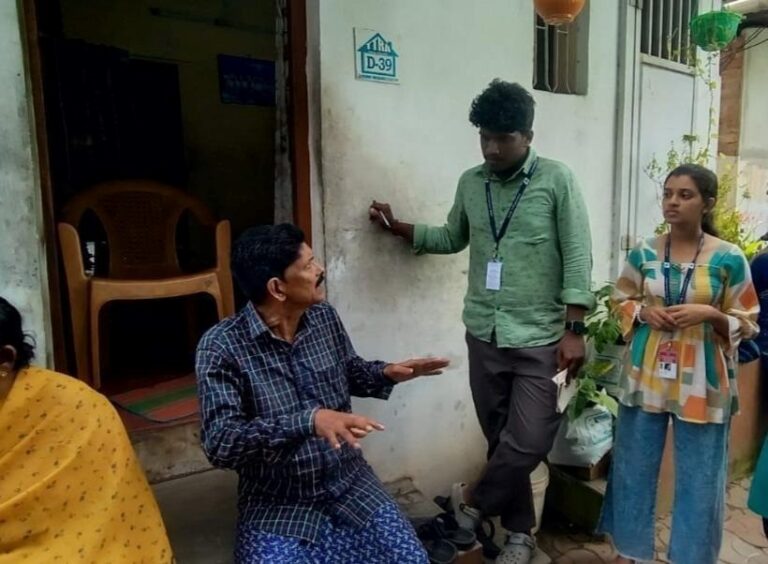
Community organisation theories emphasise that empowerment begins when people hear their own voices in a collective space. Slowly, in these shared conversations, residents began to name their issues not just as personal problems, but as shared structural realities. They began identifying patterns, tracing how the canal, waste, floods, and the absence of services were interconnected.
This shift, from isolated silence to hesitant, then more confident articulation, is what social capital scholars describe as the activation of latent capital (Bourdieu, P. 1986). The capacity for collective reflection and action had always been there, buried under layers of disappointment. It only needed a safe, respectful space to surface.
A breakthrough: When collective willingness appears
A turning point emerged during one particular Focus Group Discussion (FGD). For almost the entire discussion, a woman sat silently at the edge of the group, listening but not speaking. Towards the end, after a long pause in the conversation, she said softly, yet firmly:
“If we try, we should try together.”
In that simple sentence lies the core of bonding social capital: the recognition that individual efforts, in isolation, feel futile, but shared effort has meaning and possibility (Bourdieu, P. 1986; Aldrich, 2012). Her words seemed to unlock something in the group. Suggestions began to flow, not as complaints but as proposals:
- Increasing the frequency of waste collection to reduce overflow and smell
- Creating a simple system for segregating wet waste and managing it more systematically
- Demanding regular inspections from local health and sanitation officials
- Identifying safe, less disruptive spaces where waste management units or bins could be placed
These were not externally designed solutions dropped onto the community from above. They were homegrown ideas, grounded in lived experience, making them more contextually appropriate and potentially more sustainable. At that moment, the community was not just being organised, it was actively organising itself.
Bridging and linking social capital in action
As participation and ownership increased, the next step was to connect this emerging collective voice to formal structures of power. With the community’s consent and involvement, a multistakeholder meeting was organised that brought together Health Inspectors, Solid Waste Management Authorities, and other relevant stakeholders. For Thoppu Line, this was more than just a meeting. It was the first visible instance of social capital being rebuilt, as the community stepped into a relational space with institutions that had long felt distant or dismissive.
In response, authorities proposed practical measures, such as installing a large waste bin or an aerobin, for more systematic and sustainable waste management. On paper, it looked like a small but concrete step forward. But community progress rarely follows a straight line.
Resistance: The inevitable companion of community work
Just as the process seemed to be moving smoothly, resistance resurfaced; this time, it came from within the community itself, focused on the placement of the aerobin. Residents expressed a range of concerns:
- Fear of increased smell and insects near their homes
- Worries about children playing around the bin and the potential health risks
Although the ideas emerged from within the community, resistance reflected the internal diversity of lived experiences. Some households located closer to the proposed aerobin site feared disproportionate exposure to odours, insects, and waste overflow. Others worried that, based on past experiences, institutional follow-up maintenance might stop after installation, leaving them with a permanent waste burden. Thus, resistance was not against the idea itself, but against the unequal distribution of risk and the uncertainty of institutional accountability. In community organisation literature, resistance is not simply an obstacle to be “managed away” but is often understood as a meaningful expression of agency and political consciousness (Mullaly, 2010; Ife, 2013). It reveals anxieties, power relations, previous experiences with failed or inappropriate interventions, and the friction between institutional solutions and community realities. It also reminds practitioners that communities are not homogeneous; they have internal differences, disagreements, and ongoing negotiations.
Learning to sit with this resistance meant listening without dismissal and negotiating without coercion. In this light, the community’s distrust appeared not as irrational suspicion but as a rational, historically grounded response. Working in such a context made the stark gap between the rhetoric of schemes, policies, and mission statements and the lived realities on the ground all the more visible. Scholars describe this as the disjuncture between conceived spaces (the city as planned, projected, and documented) and lived spaces (the city as inhabited, felt, and endured) (Lefebvre, 1991; Soja, 1996; Roy, 2009).
My intervention, a few meetings, discussions, and proposals, could not possibly solve institutional injustice. But it did something more modest yet significant: it helped the community re-enter the institutional conversation as active participants rather than passive recipients. Sometimes, that re-entry, the shift from being spoken about to speaking, is itself a transformative act.
I went to the Thoppu Line to practise community organisation. In the end, it felt as though the community practised on me, organising my perspectives, slowing down my haste for visible outcomes, and teaching a quieter, deeper form of engagement rooted in patience, humility, and shared humanity.
Bio: Krishna Prabha V is a social researcher and development practitioner specialising in community development, urban marginality, and participatory governance. He currently serves as Project Technical Support-III at the Indian Council of Medical Research – Vector Control Research Centre, Puducherry. His work focuses on marginalised communities, social capital, disaster preparedness, and institutional justice, drawing from field research across Kerala and Tamil Nadu.
References
Aldrich, D. P. (2012). Building resilience: Social capital in post-disaster recovery. University of Chicago Press.
Bourdieu, P. (1986). The forms of capital. In J. Richardson (Ed.), Handbook of theory and research for the sociology of education (pp. 241–258). Greenwood.
Daly, K. (2024). Stepping out of the shadow of transitional justice: A theoretical framework for institutional justice. Victims & Offenders, 19(7), 1239–1275.
Drabek, T. E., & McEntire, D. A. (2003). Emergent phenomena and the sociology of disaster: Lessons, trends and opportunities from the research literature. Disaster Prevention and Management: An International Journal, 12(2), 97–112.
Ife, J. (2013). Community development in an uncertain world: Vision, analysis and practice. Cambridge University Press.
Klinenberg, E. (2002). Heat wave: A social autopsy of disaster in Chicago. University of Chicago Press.
Lefebvre, H. (1991). The production of space (D. Nicholson-Smith, Trans.). Blackwell. (Original work published 1974)
Moroni, S. (2020). The just city: Three background issues—Institutional justice and spatial justice, social justice and distributive justice, concept of justice and conceptions of justice. Planning Theory, 19(3), 251–267.
Mullaly, B. (2010). Challenging oppression and confronting privilege (2nd ed.). Oxford University Press.
Putnam, R. D. (2000). Bowling alone: The collapse and revival of American community. Simon & Schuster.
Roy, A. (2009). Why India cannot plan its cities: Informality, insurgence and the idiom of urbanization. Planning Theory, 8(1), 76–87. https://doi.org/10.1177/1473095208099299
Soja, E. W. (1996). Thirdspace: Journeys to Los Angeles and other real-and-imagined places. Blackwell.
Szreter, S., & Woolcock, M. (2004). Health by association? Social capital, social theory, and the political economy of public health. International Journal of Epidemiology, 33(4), 650–667.
Tierney, K. (2020). The social roots of risk: Producing disasters, promoting resilience. Stanford University Press.
Woolcock, M. (1998). Social capital and economic development: Toward a theoretical synthesis and policy framework. Theory and Society, 27(2), 151–208.
Endnotes
[1] Disaster sociology examines how social structures, inequalities, and institutions shape vulnerability, response, and recovery in disaster contexts. It emphasises that disasters are not only natural events but are produced and experienced through social and political conditions.
[2] Social capital refers to the trust, social networks, and norms of reciprocity that enable collective action. It is commonly understood in terms of bonding (within groups), bridging (across groups), and linking (connections with institutions) forms.