Invisibility and the Convergence of Formal and Informal Practices: Field Reflections on Tracing Early Care Labour Migration of Nursing Students from Kerala to Germany
Entering the Field – Starting Research in Germany
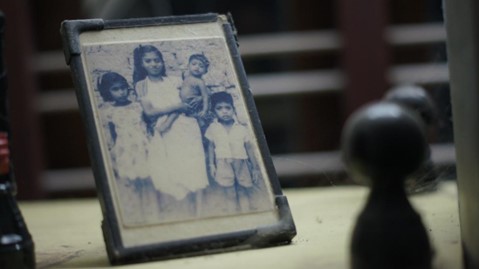
My doctoral research, begun in 2019 at the Chair of Economic and Social History at the Catholic University of Eichstätt-Ingolstadt, examines early forms of care labour migration from Kerala (India) to Southwest Germany in the 1960s. This inquiry was sparked by a personal family history: in 1964, my great-aunt migrated to Germany to become a nurse, supported by Catholic Church networks. During my academic training in South Asian Studies and International Relations, I was struck by the lack of nuanced historical analysis of this migration trajectory. Existing German (academic) narratives—often oral or community-based—left open critical questions: How could a transcontinental recruitment scheme emerge just two decades after WWII, and what role did religious actors play?
Adopting a historical migration research perspective, I examined the institutional frameworks shaping this migration, with a specific focus on their gendered effects. In German state and church archives, I accessed several thousand pages of material—ranging from policy discussions to internal correspondence—revealing how Catholic actors facilitated nursing students’ recruitment under the radar of formal bilateral agreements. Interviews with first-generation Indian nurses residing in Germany enriched the archival findings with lived experiences.
Preliminary Findings
In the post-war era, West Germany’s expanding healthcare sector faced a significant shortage of nursing staff. Catholic institutions turned to Kerala, drawing on transnational religious networks to recruit Christian women—many of whom became nuns and joined German congregations, embodying traditional Christian notions of nursing as female care work—to support church-affiliated care institutions in Germany. These efforts, which began as intra-church initiatives, were soon noticed by state actors. From 1964, the Minister of the Interior of Baden-Württemberg collaborated with Catholic Actors in what became known as the Nirmala Association—a hybrid of state-church coordination without formal diplomatic agreements. The Nirmala-women did not formally join a religious order and, in this sense, embodied the modern type of nurse that began to emerge with the reform of the nursing profession from the mid-1960s onward.
While the Nirmala Association officially ended in 1971 after a diplomatic incident rooted in its legal ambiguity, the migration dynamics it had initiated quickly evolved into chain migration, drawing thousands of women into Germany’s care sector. By 1976, Caritas, the international Catholic charitable organization and social welfare arm of the Catholic Church, estimated the number of Keralite nurses in Germany at 4,000. Yet the absence of formal state agreements and systemic documentation meant that these women’s stories remained largely invisible in official histories, falling through the cracks of what was considered “legitimate” migration. In this sense, the study offered a significant contribution to Germany’s evolving memory culture—particularly by introducing transnational perspectives, and by reflecting on how past developments continue to shape contemporary migration flows (Großmann, 2024b).

Crossing Continents – Gaining Access to the Indian Field
From the outset, I aimed to conduct fieldwork in Kerala to complement the German perspective. However, accessing church archives in India proved challenging. Indian dioceses did not respond to requests, and Indian ecclesiastical structures offered little archival continuity—often stating that processes in the 1960s had been handled informally and orally.
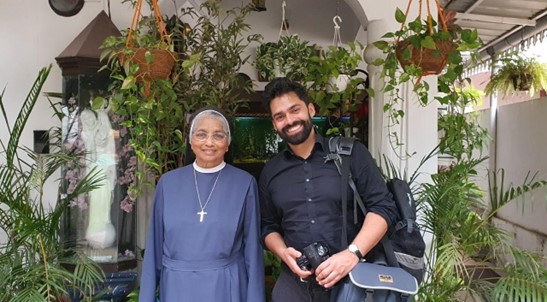
Delays due to the pandemic meant my first field trip to Kerala occurred only in spring 2023. To facilitate local engagement, I created a subtitled video to introduce my project—functioning as a “digital calling card.” Through connections with former German host families, I established contact with returnees and their communities. While some formal interviews were declined, extended informal conversations offered valuable insights. Many returnees, despite decades in India, retained fluent German and vivid memories of their experiences. During the fieldwork, I also had the opportunity to meet a nun who had been part of the first group of pioneer candidates sent to Germany in 1960. At the time of my research trip, she happened to be on home leave, visiting her family in Kerala.
In addition to interviews, participant observation played a crucial role in this study, shedding light on the social legacies of migration beyond individual life stories. Immersion in the daily routines of the participating families provided valuable insights into their everyday struggles, as well as into the broader social dynamics set in motion across entire joint families by the migration of a pioneering single woman in the 1960s. These observations were enriched by a reflexive approach that considered my own positionality, and by attention to intergenerational narratives that revealed how migration continues to shape familial roles and professional aspirations across decades.
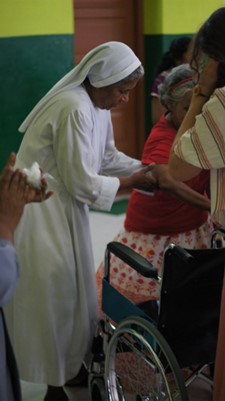
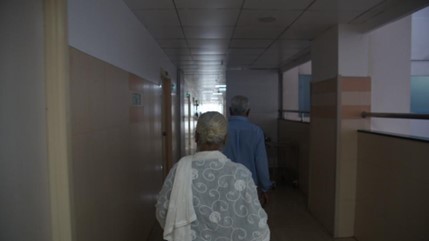
A visit to a private hospital, accompanied by a former nurse trained in Germany, further raised questions about the compatibility between the professional identity of nursing and culturally specific perceptions of the role—both historically and in contemporary contexts. Conversations with church authorities and nuns still active in the care sector revealed that church-based institutions—once central to the institutionalization of nursing—are now increasingly marginalized or absorbed into profit-driven neoliberal frameworks. Returnees who had once achieved social mobility through employment in the care sector demonstrated how vulnerable entire families remain today, as a single illness can still lead to their financial collapse.
In spite of the lack of available archival materials, I managed to gain access to key interlocutors, including representatives of the Kerala Catholic Bishops’ Conference and the German Honorary Consul based in Trivandrum. Though most were unaware of the specifics of the 1960s recruitment, they acknowledged the migration’s regional impact. Scholars I met confirmed the absence of historical research on this topic, attributing it largely to missing documentation and the dominance of Gulf migration in Kerala’s historical imaginary.
The Missing Link – Reflections on Informality and Institutional Hybridity
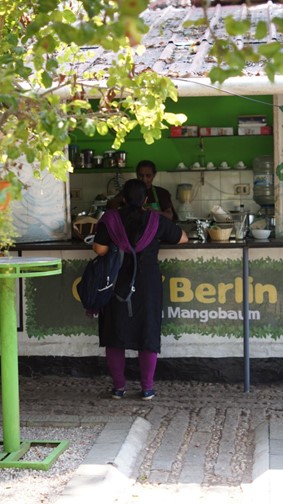
One pivotal moment occurred during a routine visit to a chai stall. Watching customers make digital payments without oversight or concern for formal receipts, I was struck by the way informal trust structured everyday transactions. This scene helped crystallise a central insight: the Catholic Church had functioned as an intermediary infrastructure, enabling mobility by bridging formal and informal systems across borders.
In the context of Cold War politics and legal constraints, the Church’s canon law—linked with Germany’s Basic Law—enabled clerics to act semi-autonomously. In Kerala, where formal administrative structures were minimal, church officials recruited women based on oral agreements and social trust. In Germany, a single priest negotiated directly with state ministries, bypassing diocesan hierarchy. He viewed the project as both spiritual mission and social intervention—helping poor Christian families through remittances that paid for siblings’ education or dowries. The German state, desperate for nursing staff, welcomed the initiative without scrutinising institutional boundaries.
This convergence of formal legitimacy and informal practice created a migratory infrastructure that was effective—but largely undocumented and invisible. It enabled transnational mobility, while simultaneously erasing the complexity of its own genesis.
Conclusion – Methodological Reflections on Transnational Fieldwork
Fieldwork in Kerala revealed how deeply informal practices shaped this migration history—and how such practices resist conventional archival or institutional reconstruction. The lack of documentation is not simply a research obstacle, but a historical phenomenon that must be understood in its own right. Accessing this “invisible” history required cultural and religious literacy, trust-building, and long-term engagement beyond formal interviews.
This experience reaffirms the value of transnational and multi-sited fieldwork—not merely as a supplement to archival research, but as a necessary means of reconstructing histories that were never fully recorded. It also challenges binaries between formal and informal, secular and sacred, and state and non-state—demonstrating how migration infrastructures are often built in precisely these in-between spaces.
Bionote: Tobias Santosh Großmann studied South Asian Studies at the South Asia Institute of Heidelberg University and International Relations at the Catholic University of Eichstätt-Ingolstadt (KU). He completed his doctorate in Economic and Social History at the Chair of Economic and Social History at KU Eichstätt-Ingolstadt in 2023. Currently, he works as a researcher in Research Field III “Migration and Integration: Monitoring and Series of Reports” at the Research Centre of the German Federal Office for Migration and Refugees (BAMF). His doctoral thesis was published by Springer VS in 2024 and is available as open access at the following link:
https://link.springer.com/book
Disclaimer: This article is written in a personal capacity and does not reflect or relate to his professional work as a research associate at the BAMF Research Centre. ChatGPT (OpenAI) was used for linguistic refinement and conceptual support. The author is fully responsible for the content and scholarly claims.
References:
Großmann, T. S. (2024a). Fachkräftemigration – Pflegenotstand – Nächstenliebe: Katholische Frauen aus Kerala (Indien) in deutschen Krankenhäusern der 1960er. Springer VS.(Skilled Migration, Nursing Crisis, and Christian Charity: Catholic Women from Kerala in West German Hospitals during the 1960s) https://link.springer.com/book/9783658460815
Großmann, T. S. (2024b). From Kerala to Germany: Imported care labour – Developments and paradigmatic changes (1960–Present). In C. Yalkin & M. F. Özbilgin (Eds.), Care and compassion in capitalism (International perspectives on equality, diversity and inclusion, Vol. 10, pp. 29–45). Emerald Publishing Limited. https://doi.org/10.1108/S2051-233320240000010003