Trust, Tension, and Testimonies: Navigating Fieldwork as a Dalit Woman Researcher
S Prasanna
Research Scholar, Department of Sociology, University of Hyderabad
This study explores the complicated question of honour within Madigas, a Scheduled Caste community, in Jogulamba Gadwal district of Telangana state, focusing on identity and positioning within the caste structure. Historically associated with menial and “impure” works such as manual scavenging, the Madigas have faced systemic discrimination, poverty, and social segregation, which perpetuate their marginalisation. Despite constitutional provisions such as affirmative action aimed at uplifting the Scheduled Castes, the implementation of these policies has been inconsistent, which has left many Madigas struggling for recognition and fundamental rights.
My study examines traditional practices and contemporary changes, particularly concerning honour killings and control over the body and sexuality. The study aims to analyse why the question of honour has gained prominence within the Madiga community, particularly in anti-caste politics. This study seeks to illuminate the contradictions in anti-caste mobilisation and the reproduction of caste identity, providing insights into the multifaceted nature of honour dynamics and their broader implications for anti-caste struggles. The research derives its rationale from my personal experiences. I have seen the barriers that keep women in my community from getting an education or having any sense of agency over their lives. It’s a complex situation, with honour, gender, and caste all tangled together, which drives my research.
Dalit movements and honour consciousness among Dalits is intrinsically linked, with the Dalit movements like Karemchedu, Tsunduru massacre, and self-respect movements acting as vehicle for the Dalits to transform their stigmatized identities into a dignified, self-defined political identity rooted in a sense of rights. The assertion of self-respect fuels the movements to demand equality, eradicate caste discrimination, and achieve socio-economic and political power. This socio- economic mobility has reinforced patriarchal norms and gender hierarchies within Dalit communities. Upwardly mobile families develop a heightened consciousness of honour and status, reflecting their desire to assert identity in a changing landscape. Unfortunately, this patriarchal nature of upward mobility persists and even strengthens amid contemporary changes, rather than fading as an outdated feature of traditional India
In Jogulamba Gadwal district, a lot of Dalits are still illiterate. Women often become stuck in traditional roles, such as working on farms or caring for households. Even after economic improvements, the socio-economic changes come with even more pressure in terms of honour, which leads to tighter control over women. While being born and raised in the community, I noticed how community pressure influenced decisions; families often felt they had to follow what the village head decided and stick to norms that prevented girls’ education after a certain age. I remember how families put their girls’ education on hold, fearing their elopement with the boys from other castes, which would threaten their societal honour.
Early marriages seemed like an easy fix for those worries, but there were always economic issues. Even when families had money, they usually spent it on boys instead of girls. It’s a challenging situation shaped by so many social factors. Even after getting into a PhD programme, I often face the pressure to get married from my family. I had to fight with my family to keep my education going. Negotiating with my parents was one thing, but dealing with the expectations of my community was another challenge altogether. I tried to reassure them that I wouldn’t bring shame to our family, but that fear of stepping outside accepted values was always hovering. I have seen firsthand how women in my community can face serious consequences for pushing back against these norms. Harassment, and even tragic honour killings, are all too real. The way caste oppression and patriarchal control come together makes life even more challenging for Dalit women. That’s why tackling these issues in my research is so crucial.
Negotiating Trust: Fieldwork Challenges in Dalit Communities:
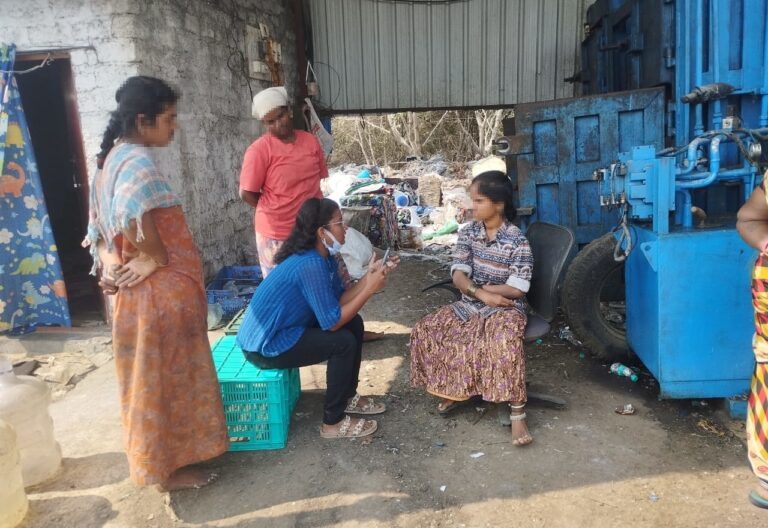
As a part of my PhD fieldwork, I am collecting data within the Jogulamba Gadwal district of Telangana state. The district has 12 mandals, and as part of my research, I am supposed to collect data related to honour killings and honour practices in all twelve mandals. Until now, I have covered relatively large mandals such as Ieeja, Maldakal, Alampur, and Ghattu. Since the core focus of my research is to understand the honour practices within the Madiga community, I am using a purposive sampling technique to select my respondents, often those most affected by honour-based killings and micro-aggressions related to such practices. My respondents include unmarried and married women aged 20-25 years and above 30 years, respectively. Similarly, I have chosen unmarried men from the age group of 20-25 years and married men from the age group above 30 years. Apart from the survivors of honour-based violence, I am also talking to the people in the community to get information about these practices. Since such cases attract more community attention, extracting some information that is often not shared by the victim or their close ones is easy. However, for some information regarding the microaggressions related to honour practices, I interviewed people from the aforementioned age groups. Apart from this, I have also collected data regarding the reported cases of honour killings in a few of the police stations in the district. I have also filed RTIs to seek detailed information regarding the cases.
Being born and raised in the same district, it was easier for me to approach people. However, when I explained the purpose of my visit, they often looked at me suspiciously and wondered why I was studying such a topic. They also suspected me of being a government agent working with the police or a journalist who would post all the information on social media or give it to the police, which might bring problems to the community. After rounds of negotiation and discussions about my PhD research, they agreed to talk to me. From more general information like their name, occupation, etc, to core questions like what honour meant to them, the discussion moved forward, facilitated by a semi-structured questionnaire. I could record their perspective on how they defined honour, how these practices shaped gender roles, how they affected individual men and women, how agency got curbed because of such practices, and what the impact of honour practices was on one’s education. However, when I interviewed women, they often hesitated to speak before men and hid any information they thought was sensitive.
While waiting at Maldakal bus stand one day, I met a few men. I explained about my work and asked them if they could provide any information regarding the same. After almost one hour of discussion, they were impressed with my academic background, and one of them started talking about some cases. Still, others prevented him from doing so as they doubted whether I was recording anything. When I assured them and showed them my phone, they gave me some information regarding honour killings in that area. In one of the villages, I took one of my friends who helped me find respondents for my research. It helped me to build rapport easily. I could gather information with ease.
Such experiences in the field highlight the importance of rapport building before collecting data from the field. Usually, such problems as honour killing, which involve women, are not discussed openly in a patriarchal society, and it is often hard to obtain information regarding the same. My identity as a woman from the same community helped me get access to the community. However, it also invoked some discomfort and suspicion among the men. My education also invoked a feeling of fear among the people as they doubted whether I was from the police or media, and if I would tarnish their reputation, or they might end up in jail.
Community members were comfortable discussing general academic topics with me, but trust issues quickly emerged once I revealed the focus of my study. I ultimately decided not to select my own village for the research because everyone knew who my family was, and word about my work reached my father. My parents worried that writing about village issues might expose the family to public scrutiny, and they often urged me to change my topic to something safer, like family matters. I reassured them that it was simply part of my project, but a girl’s movement is closely monitored and rarely accepted in villages. This was not always the case earlier, especially among Dalit communities, girls had greater freedom of mobility. However, after the rise of concerns over family honour following Dalit movements, such restrictions have also increasingly spread within these communities.
Conclusion
Fieldwork encounters serve a significant role in research. Researchers’ identity and positionality determine whether she can build rapport and collect data efficiently. In my case, my identity as a Dalit woman, on the one hand, helped me approach women from the community. On the other hand, cultural sensitivity, pesky gender norms, and my education also generated scepticism among the community members. Concerns for privacy and anonymity also made the data collection tough because the topic was very sensitive. In conclusion, fieldwork, which is often considered the essential part of sociological research, has multiple implications outside the textbooks. The field experience varies based on the identities and subjectivity of the researcher.
BIO:
S Prasanna is a Research Scholar in the Department of Sociology at University of Hyderabad. She works with Professor Pushpesh Kumar on the topic of Honour Practices among Dalit communities in Rural Telangana. She holds a Master’s in Sociology from Jawaharlal University and completed her undergraduate education from Hindu College, University of Delhi. Her research interest lies in the Sociology of Caste and Gender, Social Inequalities, Social Anthropology, Sociology of Violence, etc.