Author name: sreejith

Being in the Field: Gendered Embodiment, Vulnerability, and Belonging

The embodied experiences of being a queer researcher highlighted the threads that tie vulnerabilities to belongingness during fieldwork. Throughout my fieldwork, my queer identity became both a bridge and a barrier. On the one hand, it empowered deep connections with interlocutors, allowing us to share stories of alienation, longing, and companionship that emerged from our collective experiences as queer individuals.

Being in the Field: Gendered Embodiment, Vulnerability, and Belonging Read More »

Accessing the Elite World: Managing Identities at an Elite School

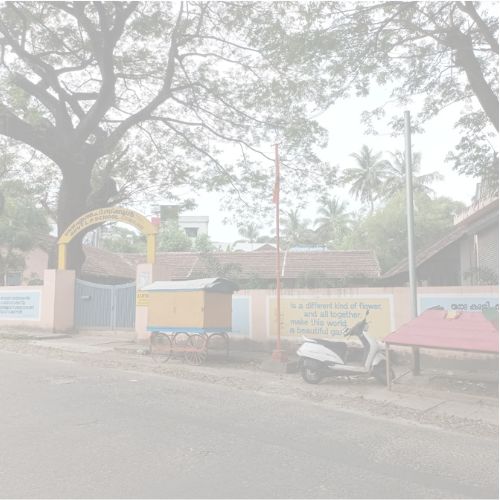
It is through the concept of reflexive sociology that I make sense of the way my identity became a free-floating entity and, in fact, shaped my access and understanding of the elite world. In such a scenario, identity stops being a static point of singularity but a flowing space capable of shifts and switches. Reflexivity becomes a heuristic tool for conducting fieldwork and analysis later.

Accessing the Elite World: Managing Identities at an Elite School Read More »

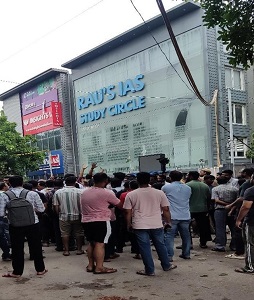
Students or Aspirants? Insights from an Ethnography of the Civil Services Exam Coaching Culture in New Delhi

What this article tries to assert is that CSE aspirants in Karol Bagh and Rajinder Nagar are not just competitors in an exam with unrealistically low rates of success which makes them go through frustration and anxiety, rather, perhaps because of the nature of the exam, what its syllabus entails, and what they aspire to become in future, they have somehow collectively become active agents of change in the region, who collectively possess an agency and who’s voices are not left unheard.

Students or Aspirants? Insights from an Ethnography of the Civil Services Exam Coaching Culture in New Delhi Read More »

Field Reflections from MM Hills: Notes on Research, Routine, and Resilience

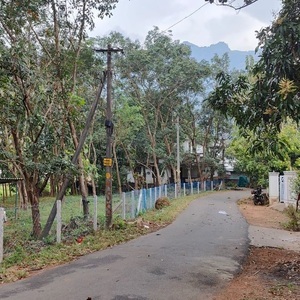
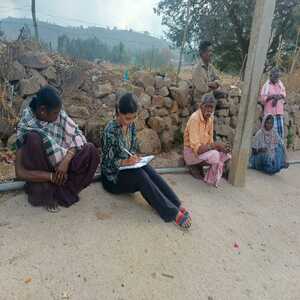
Coming from a background in physics, my pivot to conservation research often felt disorienting — but not aimless. Standing in MM Hills, trying to understand the intersections of gender, land, and traditional ecological knowledge, was not something I ever imagined, but it felt necessary. The early days of fieldwork were marked by isolation.

Field Reflections from MM Hills: Notes on Research, Routine, and Resilience Read More »

Technical Rationality

Technical rationality manifests in multiple realms of society and human action. For example, in the realm of authority and domination, rationalisation entails the substitution of traditional and charismatic authority by legal-rational authority; in the religious realm, professionalisation of priesthood and spiritual knowledge; and in the realm of law, a shift from traditional common law into codified and universally applicable modern law (Atalay, 2007).

Technical Rationality Read More »

Apolitical Campus

This article engages with the concept of an ‘apolitical campus’ or, in other words, a campus without student politics. It provides a brief history of the process of ‘depoliticization’ from governments and university administration towards attaining ‘apolitical campuses’ in India.

Apolitical Campus Read More »